Photo by Benny Manser/CRS
When you support Catholic Relief Services, you ensure that our mission is carried out in the following key areas:
Livelihoods and Agriculture
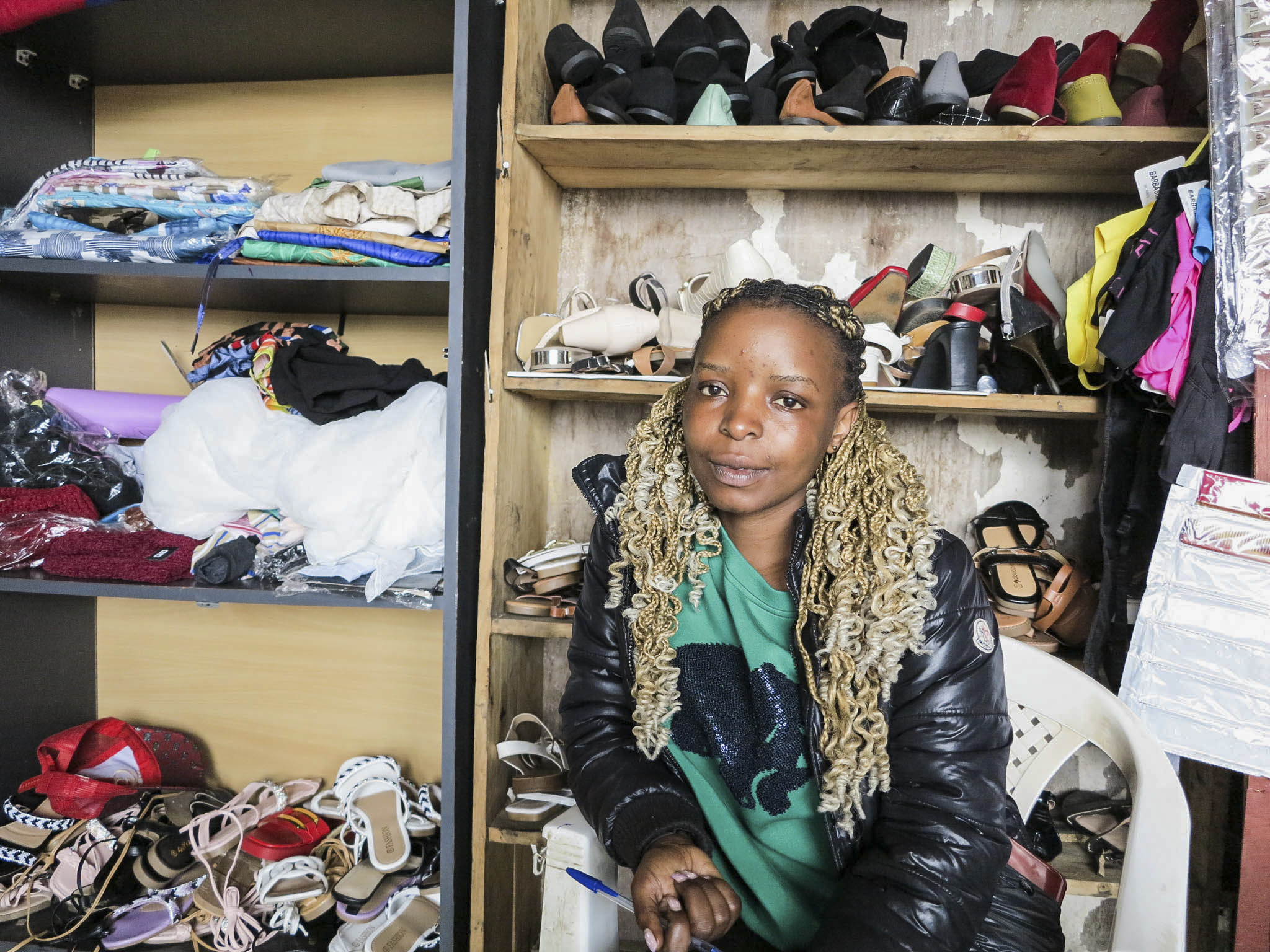
Photo by Lina Carene Ishimwe/CRS
Empowering Young Entrepreneurs in Rwanda: Janviere Tuyishimire, a 28-year-old entrepreneur from southern Rwanda, transformed her struggling small business after joining Catholic Relief Services’ Youth for Youth project in 2022. Initially lacking management and bookkeeping skills, she faced losses and declining customer trust. Through the program, she learned business planning, digital record-keeping, and client management, and began using the KudiBooks mobile app created by Rwandan youth in the same project.
Read More
It’s midday, and 28-year-old Janviere Tuyishimire is selling a variety of fashion items at her shop in the Huye district of southern Rwanda. In the last six months, she was able to double her working capital from $1,500 to $3,000. In addition, her bookkeeping and management skills have improved, which has allowed her to expand her business and invest in livestock.
This significant improvement was not expected when Janviere began her business by investing what little she had from savings. She started her business selling shoes, bedcovers and bed sheets, with the dream of one day becoming a global entrepreneur.
However, as Janviere ventured into business while pursuing her studies, balancing responsibilities became a challenge. A lack of management and bookkeeping skills made her business ventures unprofitable. During that period, Janviere doubted herself, wondering what the future of her business would look like, as she kept recording daily losses. As her stock depleted, clients started losing trust in her.
In December 2022, Janviere enrolled in the Catholic Relief Services Youth for Youth project, which aims to improve the lives and livelihoods of young adults ages 18-30 in Rwanda by strengthening their digital entrepreneurship and addressing the issues they face. While participating in the project, Janviere learned business planning, product promotion, innovation, client management, and how to digitally record transactions. Janviere began using the mobile app KudiBooks, which supported her business management and allowed her to digitally record business transactions, manage stock, and monitor profits and losses.
KudiBooks is a business management mobile application developed by Rwandan youth through CRS’ Youth for Youth project. The application helps other young entrepreneurs living in rural Rwanda to better manage their businesses and transition from paper-based to digital recording using their smartphones.
“I had doubts about the future of my business, and it was almost failing. Thanks to CRS’ Youth for Youth project, my business skills improved, and I can now digitally access the sales and purchase records on my smartphone,” Janviere says. “I now believe that I can be successful and that my business will keep growing in the coming months,” she adds.
Janviere is now making a monthly profit of $200, and in addition she uses WhatsApp to attract more clients, promote her business, and announce new items in stock. She educates fellow entrepreneurs in her district on business development skills and how they can use the KudiBooks app to manage their businesses well.
Initiated in 2022, the Youth for Youth project is part of CRS’ longstanding strategy to invest in the potential of young Rwandans to enhance their lives, become digitally literate, and benefit from accessible and relevant business and financial services.
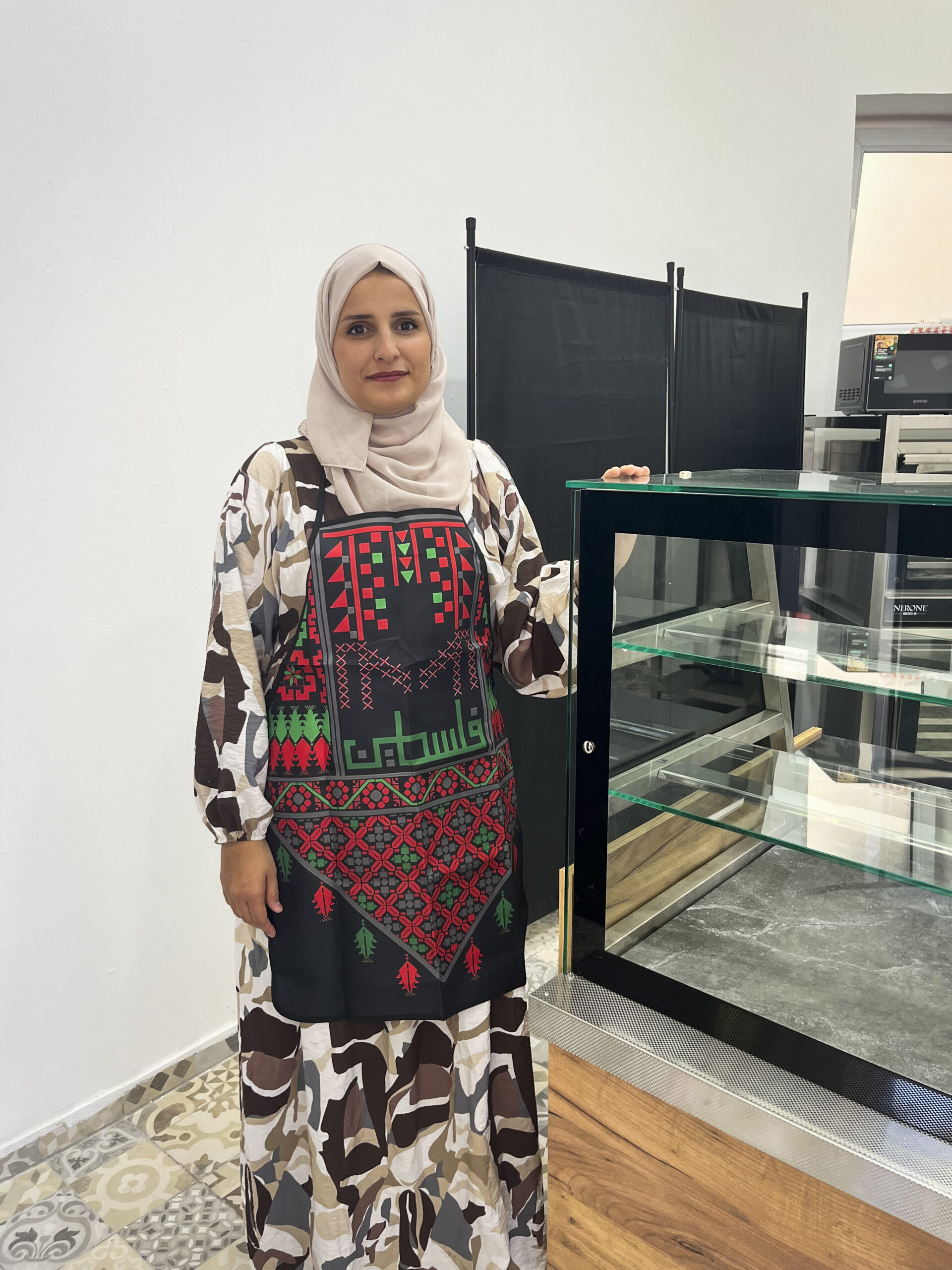
Photo by Merima Hrnjica
Palestinians Build New Life and Bakery in Bosnia and Herzegovina: After being forced to flee their home, a Palestinian refugee family is rebuilding their lives in Bosnia and Herzegovina through a small bakery rooted in tradition and resilience. With support from Catholic Relief Services and partners, the family is pursuing economic stability and belonging—turning a livelihood into a pathway toward dignity, self-reliance and hope.
Read More
After fleeing the war in Gaza two years ago, Samira and her family are starting a sweets and pastry shop in Mostar, Bosnia and Herzegovina, where they are establishing their new lives.
The fate of 30-year-old Palestinian Samira Elbarawy Rajab has been intertwined with Bosnia since before she was born. In the mid-1980s, her father came to Sarajevo from Palestine to study and met her mother. When war broke out in Bosnia, they fled to Palestine. Three decades later, another war brought them back to Bosnia. “And once again, we had to start from the beginning,” Samira says. Until October 2023, she lived in Beit Lahiya in northern Gaza with her husband and two children. She worked as a nurse while her husband ran a fruit production company.
The war in Gaza began on October 7, 2023. To date, more than 60,000 people have been killed and more than 130,000 wounded. Samira’s family was displaced within days, seeking shelter in a school with 8,000 others. They spent nearly 40 days sleeping in hallways, without blankets, water, or food. “No flour, no diapers, no milk…no hope,” she says. “How can we hope for anything?”
Thanks to her mother’s Bosnian roots and help from the Bosnian Embassy, Samira and her family escaped to Egypt in November. Two months later, they arrived in Bosnia and Herzegovina where they applied for asylum and were granted subsidiary protection status.
“I wouldn’t have left Gaza if it weren’t for my children. I left so that they could leave,” says Samira.
In Bosnia, their daughter Ayla was born, bringing joy and hope amid uncertainty. Here, Samira’s parents, sister-in-law, and her sister’s family also found refuge. From the very beginning, they have worked tirelessly to support relatives still in Gaza. It was in this spirit of solidarity that Samira began baking cakes with her sister and sister-in-law. “What else could we do? We have hands—we can make sweets. So you work, you cry, you feel pain, but you must work. This is not a choice! There are people who have no food and that’s all you think about. God saved us to help those who remained in Gaza.”
Having decided to stay in Mostar to build their new lives, they started small—selling cakes at charity bazaars and through social media. They wanted to open their own shop, but the idea seemed like an elusive dream. “Little by little, our idea began to grow. I said, ‘Let’s open a small bakery.’ And then CRS came and gave us support—that was the push we needed. Without them, we wouldn’t have succeeded,” Samira says.
With support from UNHCR, CRS helped Samira develop a business plan, find space, purchase equipment, and register her business. The support she received has been vital—not only for her economic stability and integration into Bosnian society, but also for helping relatives in Gaza.
“We have walls here, we have food—there is nothing there,” she says.
Her shop is more than a business; it is a testament to support, resilience, and a tribute to survival and belonging. In sweets, Samira found a livelihood, and a way to preserve the rich culinary heritage and memories of her homeland. She originally named the shop “Ajwa Sweets,” after the type of dates used in her recipes but later chose “Palestinian House.”
“To let it be known that it is something from us.”
Through the flavors of Palestine, Samira will bring a piece of her world to the community that welcomed her.
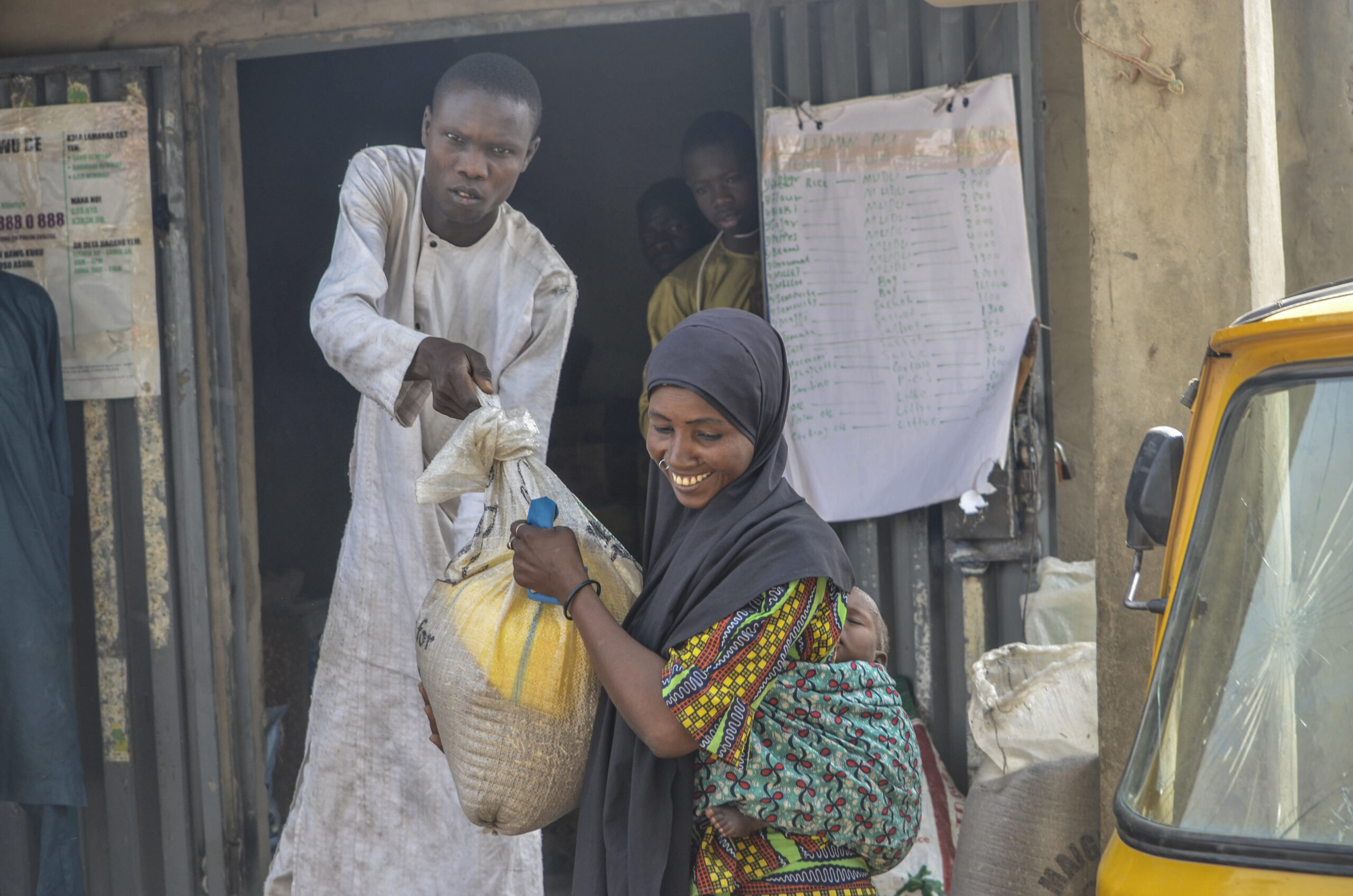
Photo by Dorathy Okaba
Rebuilding Lives and Livelihoods in Nigeria: Conflict in northeastern Nigeria has displaced millions of people and disrupted livelihoods, leaving families struggling to meet their basic needs. Through emergency assistance and recovery programs, Catholic Relief Services is helping people rebuild lives and livelihoods—supporting local markets, strengthening economic resilience and enabling families to regain stability and hope.
Read More
Ongoing conflict in northeastern Nigeria has significantly disrupted agricultural activities, trade and other economic sectors, threatening livelihoods for many individuals in the region. Furthermore, the displacement of more than 2 million people has strained resources and infrastructure.
In 2016, Maina Mustapha Alhaji, a small business owner in Gubio town, Borno State, fled with his family after a series of attacks in Boko Haram. With no business or possessions, he faced the daunting task of providing for his family.
“I struggled to make ends meet. Even feeding my family was a problem because I lost everything I had during the attack,” Maina says.
Kaka Bura Hassan, a food vendor from the Benishek community, relocated to Maiduguri with what little remained of his assets, seeking a fresh start. But his attempt to build a new business failed as he struggled to support himself with loans.
Catholic Relief Services’ Improved Access to Lifesaving Emergency Response, Recovery and Timely Support project is delivering urgent food assistance to families who have been affected by conflict. Through this approach, the project offers training and tools that enable vendors like Maina and Hassan to easily accept electronic food vouchers from project participants.
In 2018, after the camp where Maina was living shut down, he returned to his hometown. Fortunately, he was able to become a CRS food vendor—supplying his shop with a variety of food for monthly distribution. In this new role, Maina’s living conditions improved: His business expanded, profits soared, his children returned to school, and he was able to hire four employees. With CRS’ support, Maina is now one of the most popular vendors in Gubio’s local market.
Just like Maina, Hassan also heard about the CRS vendor program and decided to apply. He was selected for training and provided with the support and resources needed to rebuild his life. Hassan was able to pay off his loans and acquire more economic assets, paving the way for a brighter future for himself and his family.
“Looking back at where I came from, I am grateful to CRS for providing me with the opportunity to participate in the food distribution program. CRS has enabled me to overcome hardship. Now I can support myself and my family,” Hassan says.
Health and Education
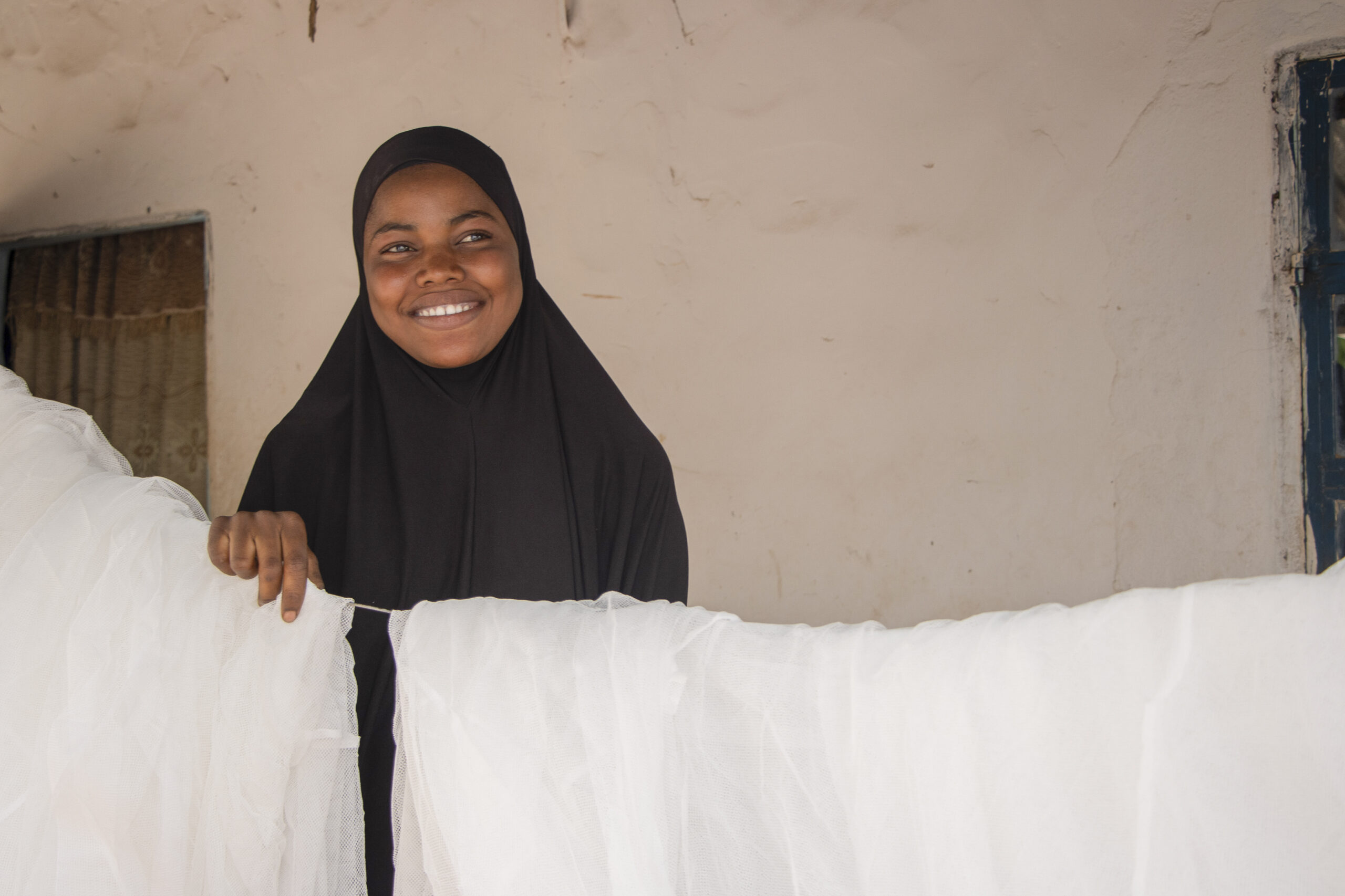
Photo by Nanette Gendry/CRS
Preventing Malaria With Bed Nets in the Gambia: In the Gambia, malaria remains a serious threat—especially for young children and pregnant women. Through the distribution and promotion of insecticide‑treated bed nets, Catholic Relief Services is working with communities and health partners to prevent malaria, protect families and reduce illness during the most high‑risk seasons.
Read More
Penda Baldah, a young woman from the small village of Bassang in The Gambia, used to spend sleepless nights swatting away mosquitoes and scratching itchy bites. Twice, she contracted malaria—a potentially life-threatening disease. Like millions of people across sub-Saharan Africa, her family, friends and neighbors suffered similarly.
According to the National Malaria Control Program, more than 100,000 malaria cases were recorded in The Gambia last year, with young children and pregnant women most at risk. This can be averted by using an existing tool to protect people: insecticide-treated bed nets. According to the World Health Organization, sleeping under an insecticide-treated bed net can reduce malaria infection by nearly half. It is simple protection that saves lives and gives families peace of mind.
But still, many families don’t have access to or can’t afford these nets.
That is why in partnership with the Ministry of Health through the National Malaria Control Program, Catholic Relief Services is working to make that protection accessible to every Gambian family. Through the Global Fund Malaria Grant Cycle 7 project, CRS is leading the distribution and promotion of insecticide-treated bed net use, while helping communities understand the importance of their use through social and behavior change communications.
In addition to having access to bed nets, it’s important that families know how to use and care for them, as well as take additional protective measures such as clearing away stagnant water where mosquitoes breed.
Bed Nets and Malaria Education Protect Families
For families like Penda’s, a bed net is more than just a health measure. It’s an act of protection. Access to insecticide-treated nets can mean the difference between illness and health, especially during the rainy season when the mosquito density is high and breeding intensifies.
Each net distributed is a promise of safety, a safeguard against lost school days, lost work, and the comfort of knowing their children can sleep soundly through the night.
Turning Access to Bed Nets Into Action
For Penda, receiving bed nets for the first time has turned her previous worries into action. After years of suffering and repeated illness, she finally feels her family is truly protected.
“All my family has been affected by malaria,” she says. “Now, I will make sure we use these nets every night and day.”
Each bed net distributed through the campaign represents a mother’s relief, a child’s rest, and a family’s hope. The fight against malaria is being won: one bed, one net, one night at a time.
Enhancing Maternal Health With Ambulances in Ghana: In parts of rural Ghana, long distances and limited transportation can prevent women from reaching health facilities in time for safe deliveries. Through maternal health initiatives supported by Catholic Relief Services and partners, emergency transport systems—including ambulances and community‑based referral networks—are helping pregnant women access timely care, strengthening health systems and saving lives.
Promoting Child Development Through Village Health and Nutrition Days: Meet Elinah Ezekia Mtawa and many others in Tanzania whose families have benefitted from health and nutrition education. Village health and nutrition days provide locally accessible, transformative resources and education to address child growth challenges and essential health needs. Thanks to supporters like you, this program has helped reduce the child stunting rate in Mbeya, Tanzania, by 4% since 2016. Your support changes lives.
Life-Changing Water Access
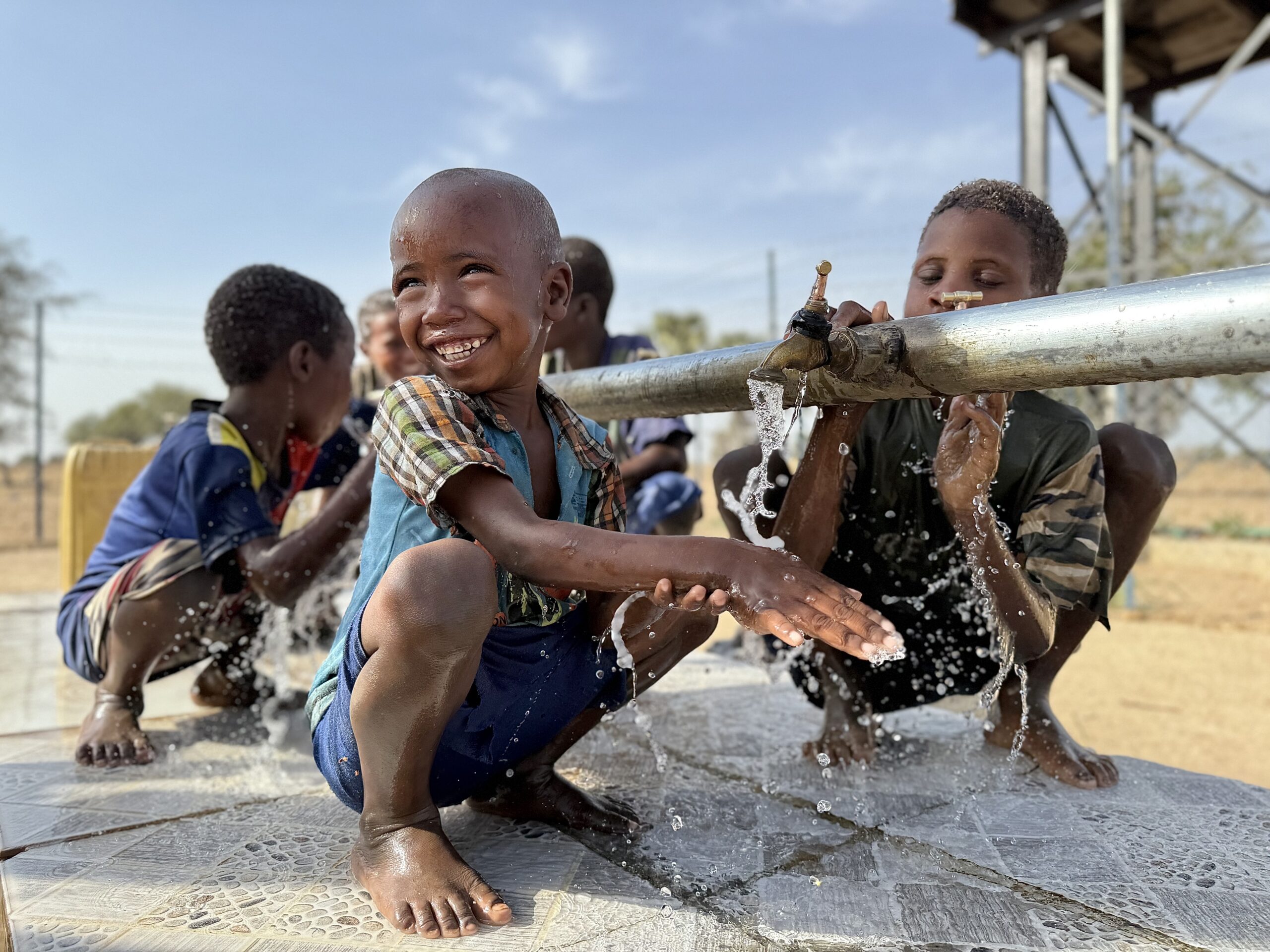
Photo by Melikte Tadesse/CRS
Water is Life: How Access to Clean Water is Restoring Dignity in Darfur: In Darfur, conflict and displacement have left millions of people without reliable access to safe water, putting health and dignity at risk. Through water, sanitation and hygiene efforts, Catholic Relief Services is working with communities to restore access to clean water—helping families protect their health and meet one of life’s most basic needs amid ongoing crisis.
Read More
Somia Alzein Ahmed, a mother of four in Darfur, Sudan, used to leave her home early every morning to collect water and return late—sometimes not until mid-afternoon. Not because the water source was far away, but because it was overcrowded.
“Our main water source was an open dug well,” Somia explains. “It used to take about eight hours just to collect water because so many people used that single source. I would leave at 7:00 a.m. and not get back home until around 4:00 p.m. The issue wasn’t the distance—the source is nearby—but the crowd was the problem.” Sometimes, even after hours of waiting, the water level dropped so low that families had to wait again for it to refill. The water was not clean, but it was the only option for her family and her community.
Somia’s experience reflects a wider crisis unfolding across Darfur and much of Sudan, where conflict and displacement have placed enormous strain on already fragile systems. Nearly half of the country’s population is facing crisis-level hunger, and millions of people have been forced from their homes, often settling in areas with limited access to food, clean water and basic services. In these conditions, unsafe water becomes a daily threat to health and survival.
More than 11 million people in Sudan lack safe water, sanitation and hygiene services, with the impacts especially severe in areas affected by violence. Health facilities and schools are critically short on functioning infrastructure. Many have dilapidated latrines, nonfunctional handpumps or no waste disposal systems, increasing the risk of disease outbreaks such as cholera and acute diarrhea. In conflict-ravaged Central and East Darfur, families are struggling to meet one of life’s most basic needs: access to safe water, sanitation and hygiene.
When Unsafe Water Makes Families Sick
For Somia’s family, the consequences of unsafe water were severe. “Many people who go to the clinic have problems like renal stones and urinary tract issues,” she says. “Children also frequently get sick with worms and diarrhea.” Doctors warned her relatives not to drink the contaminated water—but without alternatives, they had no choice.
Across Central and East Darfur, years of conflict have damaged water, sanitation and hygiene infrastructure. Health facilities and schools often lack functioning latrines, safe waste disposal or reliable water points, increasing the risk of waterborne disease. Families frequently walk long distances for water, rely on contaminated sources and practice unsafe hygiene because of limited resources and awareness. In these areas, poor access to water and sanitation is closely linked to child malnutrition.
A Turning Point Through Water
With support from CRS, Somia’s daily reality has changed. “Now, it takes about one hour to collect water in the worst-case scenario. Otherwise, it only takes about 30 minutes,” she says.
Access to clean water has transformed her family’s health and routines. “I use it for drinking, washing clothes, bathing, cooking and providing water for my children and livestock,” Somia explains. Her children get sick less often. Her cattle are healthier. Tasks that once consumed entire days are now manageable parts of daily life.
Today, communities are working to restore essential water and sanitation services in areas heavily affected by conflict and displacement. Activities include rehabilitating wells and boreholes, constructing ventilated pit latrines with hand-washing facilities, promoting hygiene through trained community workers and strengthening local systems to manage waste and prevent disease outbreaks.
Building Sustainability Through Community Leadership
For Somia, clean water is not only about convenience—it is about survival. “We fast during Ramadan for 18 hours. This duration shows us how to survive without water,” she says. “After 18 hours without it, you could die—not because of lack of food, but because of lack of water. So, water is life.”
Her community is now taking responsibility for protecting that lifeline. A local water committee collects small household contributions to fund repairs and maintenance, protects the water source, and manages daily access. These community-led systems—supported and strengthened by CRS—help ensure that services can continue over time, even in unstable environments.
“This is our own service,” Somia says. “It will continue even if CRS is no longer here.”
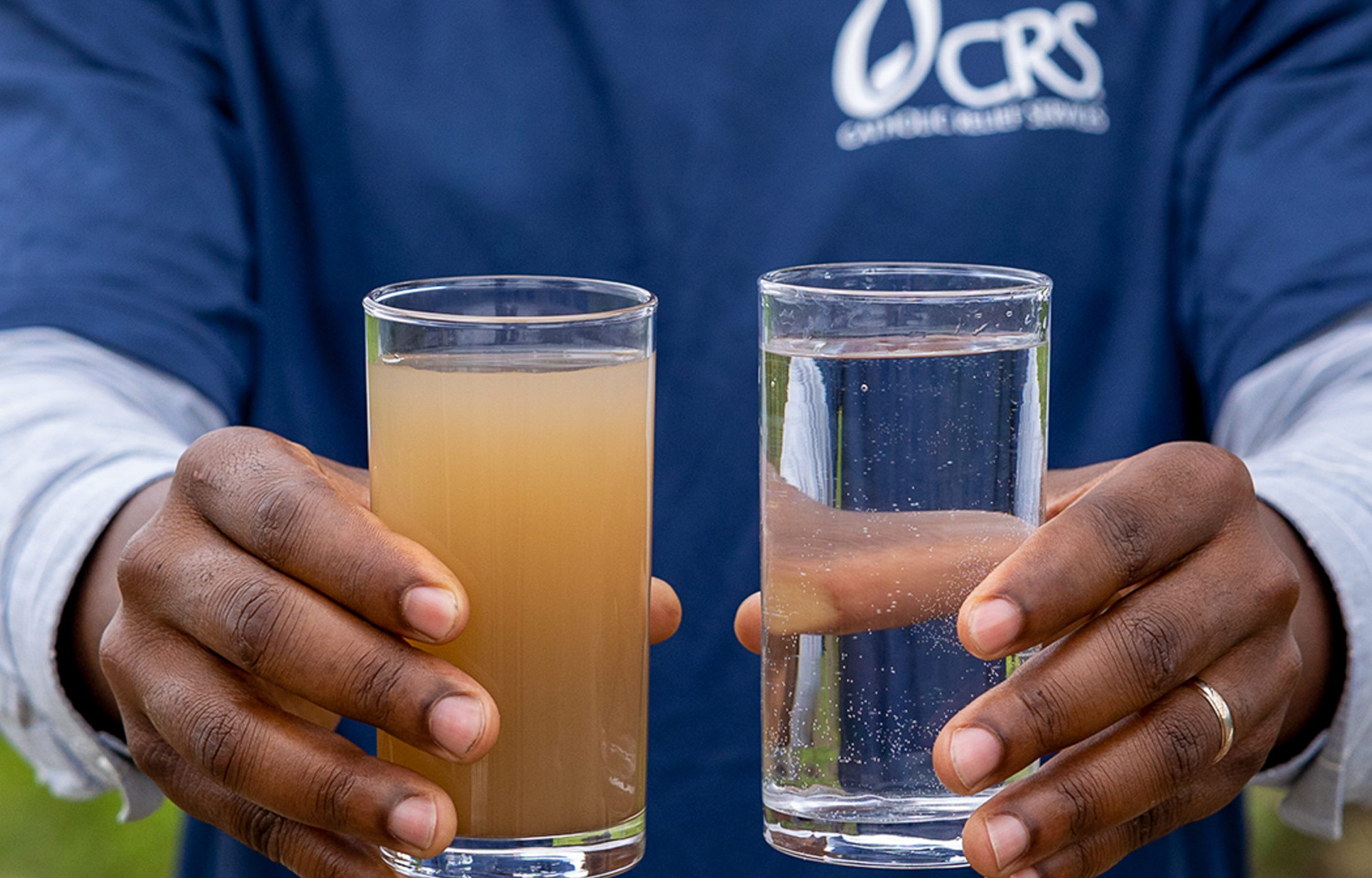
Access to Clean Water Saves Lives: Around the world, access to safe water is essential to health, dignity and survival. Through its water, sanitation and hygiene programs, Catholic Relief Services works alongside communities to expand reliable access to clean water, improve sanitation and promote healthy hygiene practices—both in emergencies and over the long term. CRS takes an integrated, community-led approach that strengthens local systems, prioritizes equity and helps families stay healthy, resilient and able to rebuild their lives.
Honduran Farmers Address Water Challenges With Support from CRS: Your support helps CRS address the root causes with local solutions. Honduran farmers, like many around the world, are facing increasing threats from changing weather patterns and natural disasters. Water shortages made it nearly impossible to produce crops at home, creating the pressure to migrate to find work for farmers like Nery García Martínez. With support from CRS, the farmers themselves assessed the problem, designed a solution, and were empowered to implement it. When farmers can produce at home, the need to migrate ends and families can stay connected. Your support transforms lives like Nery’s.
Journey of Water in Ethiopia: Hawwa Mussa is an Ethiopian mother of six whose life has changed thanks to your support. Much of life for women in her village revolved around collecting water, day in and day out, until CRS and partner organizations changed that. The change in access to water has made life safer, opened doors to new sources of income, enabled children to attend school, created reliable sources of food, and allowed women like Hawwa to dream big. Watch the video to learn more about how life has changed for Hawwa and others.
Emergency Response and Recovery
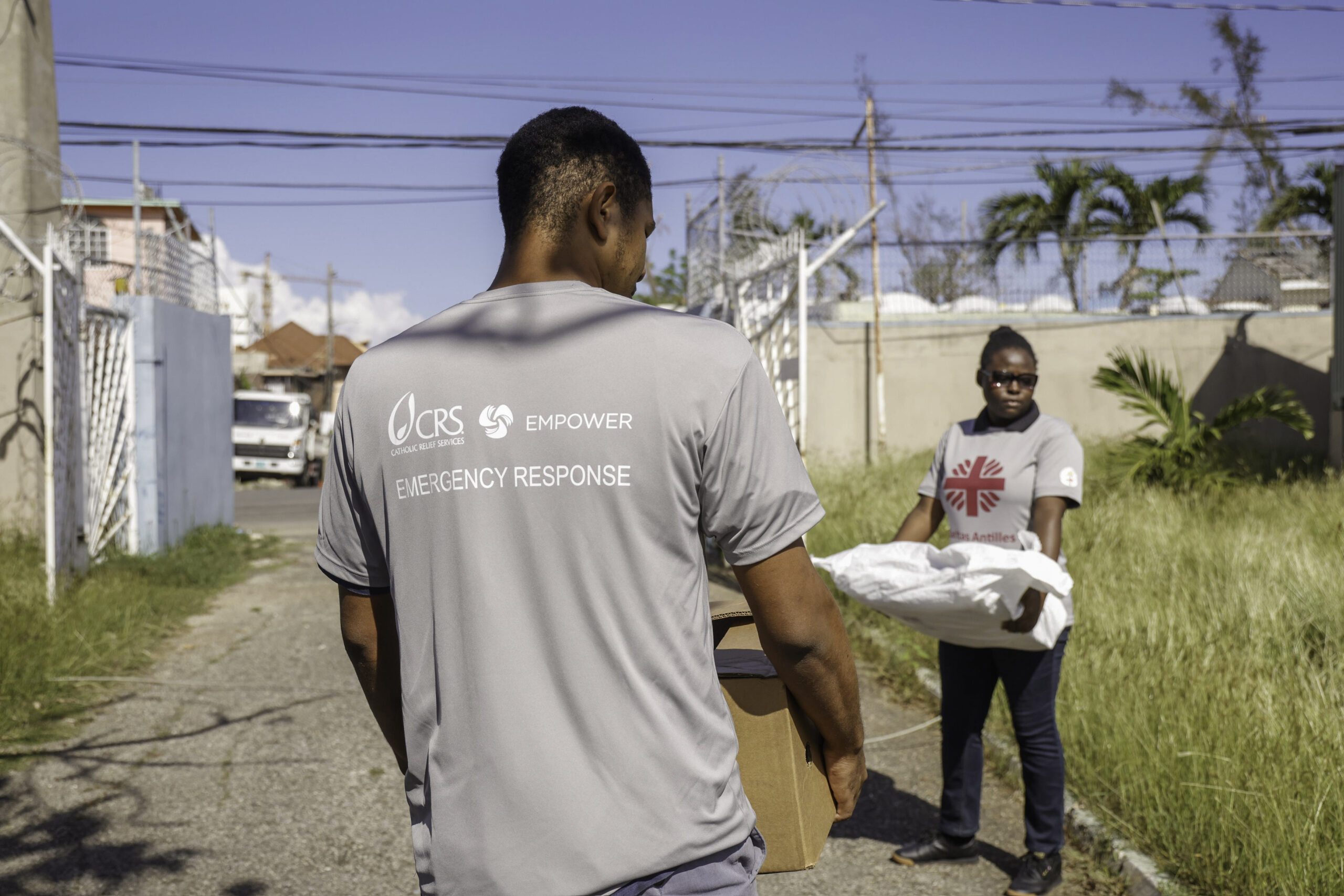
Photo by Oscar Leiva/Silverlight for CRS
Empowering Communities in Jamaica After Hurricane Melissa: After Hurricane Melissa devastated communities across Jamaica, local families and institutions have been leading the work of recovery—assessing damage, restoring shelter and helping neighbors rebuild. This story highlights how Catholic Relief Services, working through trusted Church networks and local partners, supports community–driven recovery rooted in dignity, faith and local leadership—so people closest to the crisis can shape their own path forward.
Read More
Hurricane Melissa made landfall in Jamaica as a powerful Category 5 storm on October 28, 2025, causing devastation and extensive flooding. At its peak, Hurricane Melissa reached winds of 185 mph, making it one of the most intense Atlantic storms in more than a century—surpassing even Hurricane Katrina.
In some communities, an assessment led by Caritas Antilles and Jamaican diocesan officials found that more than 90% of households suffered major or total housing damage, leaving many families sheltering in partially collapsed homes. Families lost personal belongings and access to food and basic goods, as well as jobs and income.
Henry Haught, a worker from Montego Bay, says Hurricane Melissa tore apart the historic Sacred Heart Catholic church in Seaford Town and left families across the area without power, water or safe shelter. “The night when it came, it was sounding like a cat whistling. Sounded like a jet sometimes. Sounded like an earthquake. And everything was destroying this church. We don’t have any more church, and we are pleading for help,” he says. “The people around there are suffering. And I know we’re going to ask for help to restore back this building to full glory because this is the main church right in this parish here where a lot of people come every Sunday and worship.”
“Coming together, we can work to rebuild and put people back into a stable existence,” says Kenneth Richards, Archbishop of Kingston. “Humanitarian need is necessary now, and we cannot allow anything to be spared to bring back the people who are suffering here in Jamaica.”
During emergencies like Hurricane Melissa, people often turn to faith-based and local organizations for help. There is a lot to quickly coordinate, from assessing the impact of the emergency to identifying those most in need, collecting community feedback, arranging transportation to safe areas or to distribution sites, and following safeguarding policies.
Catholic Relief Services’ approach to empowering local people and organizations is rooted in the Catholic social teaching principle of subsidiarity—the belief that people closest to the problem are best positioned to solve it. By strengthening local leadership and institutions through its EMPOWER initiative, CRS honors the dignity of each person and community, accompanying local institutions in serving the common good.
EMPOWER equips local partners with tools and trainings that strengthen their ability to respond immediately and to build resilience for the future. From managing human resources to improving communications and financial accountability, these skills help communities take charge of their own recovery. CRS also supports partners in leading their own emergency responses and applying for international grants directly—without needing to go through CRS. This puts them at the forefront of humanitarian efforts in their own communities.
“When you collaborate with a local organization, you get a firsthand view of the real needs on the ground. You find yourself in those hard-to-reach areas, truly understanding the day-to-day challenges that local organizations face,” says Christopher López, emergency program and management technical advisor from EMPOWER, who arrived in Jamaica from Ecuador just three days after the disaster struck. “It’s a very human, very equal-footing partnership where you’re not just advising from afar—you’re living the response with them. It’s been a privilege to stand shoulder-to-shoulder with Caritas Antilles, understanding their realities and building a true partnership that goes far beyond the boardroom.”
In this emergency, the EMPOWER team continues to support Caritas Antilles in Jamaica by providing cash assistance, delivering household relief items to extremely vulnerable families, setting up help desks at distribution sites and training volunteers.
“This response is literally saving lives. The lives of those who have been adversely impacted, they are the current need. They are asking for water. They are asking for food. They are asking for shelter. They are asking for assistance to build their homes,” says Diane Robinson, emergency coordinator with Caritas Antilles. She says there has been an immense need for support. “The situation is dire,” Diane says. “I see hope from the mother who comes and is grateful for whatever little that she receives. She perhaps does not have a roof, but she’s grateful that she can have a tarp to put over her roof.”
“We are the perfect example of strength in unity, because we have staff in the area from different nationalities and countries, with skills and abilities that complement each other,” says Karen Morataya, a technical advisor with EMPOWER. “Each affected home reflects a story of loss, but also an opportunity to respond quickly and support communities on their path to recovery. I think one of the things that motivates me personally is seeing people’s faces when we deliver our aid, seeing that change from hopelessness to relief—a sense of hope that they aren’t forgotten by the world and that there are people thinking about them, who care about them.”
Archbishop Richards says the relief effort is so important for so many communities in Jamaica.
“It’s humility and a commitment to service that is required at this time. And so that is where collaboration is so invaluable: to advance the restoration of human dignity and the living conditions of persons to get them back on a stable living,” he says.
CRS’ EMPOWER initiative, Caritas Antilles and local communities will continue to provide emergency aid and recovery assistance. When you donate to CRS, you bring safety, stability and hope to communities in crisis. Your generosity saves lives and ensures families can rebuild—stronger than before.
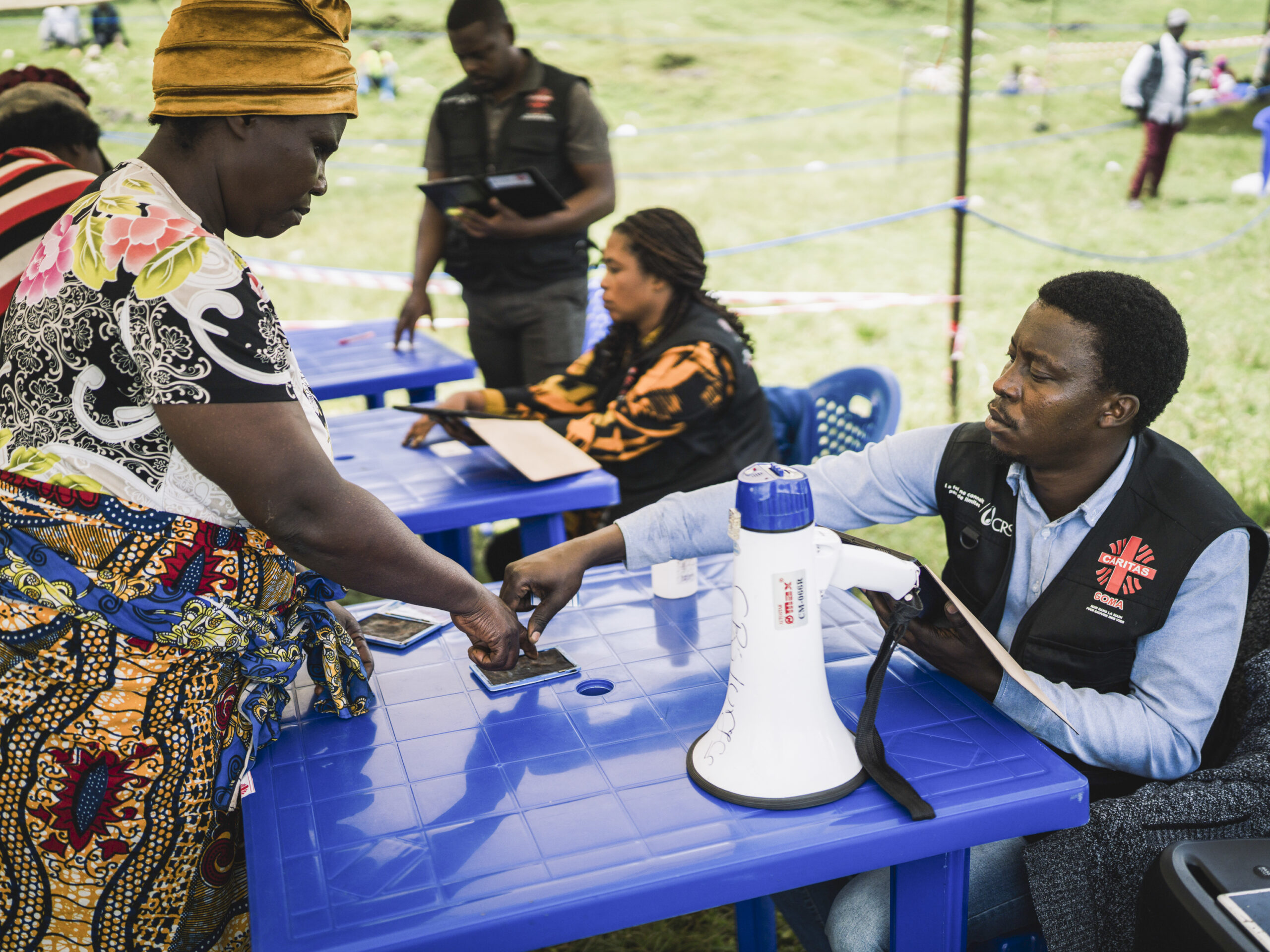
Photo by Hugh Kinsella Cunningham for CRS
A Bird With Two Wings: How You Help Save Lives With CRS: As crises deepen and public humanitarian funding slows, families around the world are facing urgent needs with fewer safety nets. This story explains how Catholic Relief Services relies on a “two wings” approach—pairing immediate emergency response with long-term recovery—made possible through flexible, private support. It shows how this kind of help allows CRS and its Church partners to act quickly in hard-to-reach places and stay alongside communities as they rebuild with dignity and hope.
Read More
Right now, vulnerable families around the world face crises on multiple fronts—from conflict and hunger to displacement and disease. And while public assistance is slowing or disappearing in some of the most desperate areas, Catholic Relief Services continues to show up—thanks to you.
Your private, unrestricted donations make it possible for CRS and our Church partners to respond quickly, compassionately and effectively. When governments or organizations pause, delay or scale back funding, your generosity fills the gap, providing urgent relief and hope to people who need it most.
In the Democratic Republic of the Congo, more than 27 million people are experiencing acute food insecurity due to ongoing violence and displacement, climate change and weak infrastructure and agricultural systems.
In the Ituri province, a region many humanitarian organizations can’t even reach, CRS is working alongside Caritas Bunia to deliver emergency cash assistance to families so they can purchase food, medicine and basic supplies. CRS has also been working with families who fled Goma during violence and now need to return to their villages.
Asifiwe Christine Kibibi, a mother of seven, returned home to find her house half-destroyed by bombs in Kingarame.
“I was [excited] to see Caritas Goma at my door,” she says. “They asked about my family…and then came back to help. When I heard about the assistance, I felt such relief. I’m truly grateful.”
Feza, a mother of two, also received food assistance in Kingarame, in eastern DRC’s North Kivu province. Her husband was severely wounded during the conflict, leaving her as the family’s sole provider.
Since returning to Kingarame, she says the biggest needs are shelter and start-up funds for a small business. “Thank you for this assistance,” she says. “My family will no longer struggle to put food on the table.”
Emergency assistance is more important than ever, but oftentimes, public humanitarian funding is not available. Flexible, private support allows CRS to act when every minute counts. But it’s not just about quick aid during an emergency. It’s about planning for long-term stability.
“Private donations give us the agility to respond immediately, when public funding can’t.”
Your support is helping deliver food, blankets, cooking supplies, safe shelter and hygiene essentials to people who have lost everything. And beyond material aid, CRS and Caritas are standing beside these communities to advocate for peace, justice and dignity.
We especially prioritize vulnerable groups: orphans, pregnant women, older people, and people with disabilities. When you give to CRS, you become part of this mission. Because every person deserves not just to survive, but to live with hope.
Reaching Hard-to-Access Areas With Emergency Support in Lebanon: Since March 2026, more than 1 million people in Lebanon have been forced to flee their homes. In response, Caritas has carried out an extraordinary relief effort, assisting more than 100,000 people through over 100,000 services since the start of the conflict. Catholic Relief Services has supported this work by providing essential supplies and will continue assisting with the creation of child-friendly spaces in collective shelters, as well as strengthening protection services for people most at risk.
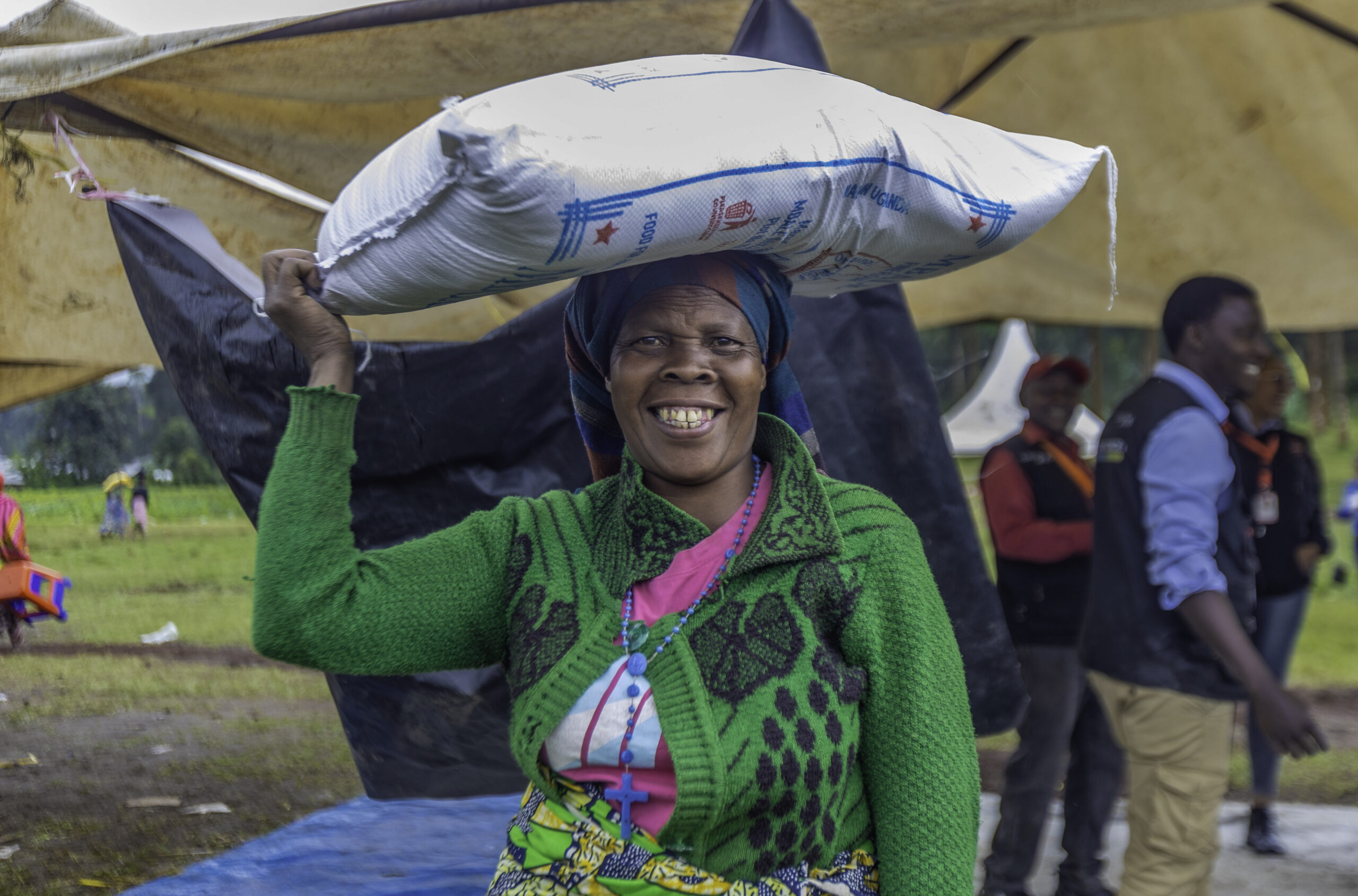
Providing Lifesaving Assistance to Families in the DRC: Violence in eastern Democratic Republic of the Congo has forced millions of people to flee their homes, leaving families without reliable access to food, clean water and basic services. Catholic Relief Services is responding alongside local partners to provide lifesaving emergency assistance to displaced families. Even as insecurity and access challenges continue, CRS remains alongside affected communities—working through trusted local networks to bring relief, restore dignity and offer hope amid ongoing conflict.
Renewed Hope in a Transforming Syria: After years of conflict and displacement, many Syrian families are returning to homes that were damaged or left unlivable. Through shelter and home-repair programs, Catholic Relief Services and local partners are helping families restore safe, dignified living spaces—supporting critical repairs such as sanitation, water access and structural rehabilitation so people can return home and begin rebuilding their lives.
Become a Catholic Relief Services Insider
Do you want to receive exclusive email updates directly from Catholic Relief Services?
Get direct and instant access to a member of our team who will share information about your impact, project outcomes and stories of our work around the world.